Pages

Tuesday, 14 October 2014

Shakespeare In Love
Shakespeare in love in an American – British ROM-COM which is directed by John Madden.  It’s the perfect mixture of romance from the Renaissance period. The film shows how love blooms between an already married Shakespeare and an about to be married Viola de Lesseps, Thus inspiring the play Romeo and Juliet. The film’s a classic example of the Renaissance fashion in the 1500’s no wonder it won 7 awards which includes an Academy award too.

Women are dressed in beautifully detailed and profligate. Queen Elizabeth is seen wearing gorgeous heavy embroider gowns with trails, and she wore very elaborative hats which consisted of various kinds of jewels and feathers. Like Queen Elizabeth many women wore wigs. Through detailing, the wealthy class in Britain exhibited their royal status. The one indispensible thing in all women’s closet was a corset (a clothing piece only worn by women to hold their torso and make their figure appear thinner) It was tightly tied around their waists using strings. On the contrary women from different classes were seen wearing farthingale, which is a structured metal object worn under a skirt (this was worn to enhance their buttocks). Poorer women used to dress up wearing bonnets (a hat usually white colored worn to protect one’s head). The royalty also wore a collar made from changeable piece of cloth called a ruff (to enhance one’s neckline). It was generally made out of lace; in case of the commoners they were very simply designed.

When it came to the men a lot of them can be seen wearing bases which were skirts made by adding pleats towards the centre  , which is followed by a codpiece , usually made to separate fabric in the form of a pocket attached to the skirt to cover their private parts. The upper body was covered by what is called a doublet, which is a closet fitted jacket worn by most men in that period. We could see our main lead (i.e. Shakespeare) wore a simple leather one while on the other hand royalty like Lord Wessex wore highly embroider doublets. Frilled linen shirts were also seen. The men wore hoses to cover their legs and then leather boots. Also they wore very weird shaped hats, breeches (puffed pants which are worn with stockings) and pecadils (square flaps at the base of the doublet).


Altogether Shakespeare in Love being the amazing movie that it is  give us a very close look to costumes worn in that period. It is amazing how garments from that period are still in use (I personally own a corset) but before this movie I had what so ever no idea that these pieces of fashion are bought along from the Renaissance time.

Wednesday, 1 October 2014

Amateur's try at photography


G irly  Photography

I remember coming across pictures on tumble a few years ago and wondered to myself , if  I  could do stuff like that . So for my Portfolio for my college I made a series of compositions and shoot ‘em .


Hope you like it 

Ancient Greece

Ancient Greece
“Classical Greece” refers to the period between the Persian Wars at the beginning of the fifth century B.C. and the rise of Alexander the Great in 323 B.C. The classical period was an era of war and conflict—first between the Greeks and the Persians, then between the Athenians and the Spartans—but it was also an era of unprecedented political and cultural achieve It also brought us the political reforms ,most enduring contribution to the modern world: the system known as demokratia, or “rule by the people.”
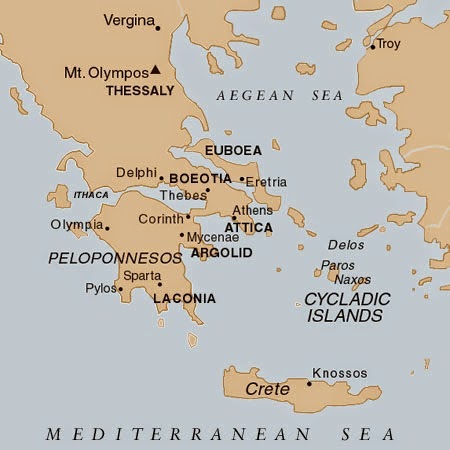
Map of ancient greece
        Material Available and innovations –
The ancient Greeks loved live theatre. Every town had at least one open air theatre. These theatres attracted crowds of 15,000 people. Each town bragged about how wonderful their plays were and how marvelous their actors were.
The ancient Greeks were wonderful architects. They invented three types of columns to support their buildings. Each was beautiful. From a distance, each column looked straight, no matter which of the three designs they used. But up close, the columns might actually tilt a bit, or lean left or right, to better support each building. The Greeks wanted things to be beautiful, but they also wanted things to be strong. 
The first Olympics games are usually given the start year of 776 BCE, but they probably began even sooner. The ancient Greeks loved competitions of all sorts, especially sporting competitions. The Olympics were not the only competition games held in ancient Greece, but they were the most popular.  
Influence of Art and architecture on costume –
The Greeks were attracted to simple, sharp, elementary forms very much in opposition to the sumptuous, over decorated textiles of the East and they transported into their costume the dominant ideas of their architecture.
 The Ancient Greeks were not fussy about their clothing. The garments they wore were made for function, and they were made simply. A single piece of fabric could be styled and restyled, to fit a particular occasion or a fashion. And with Greek summers being brutally hot, the less fabric and complicating seams to deal with, the better.
men's chiton
The fabrics that the Greeks used for their clothing was sometimes spun in the home (often into a heavy wool material), or made from linen fabric that was imported. For every member of the family, except for infants who often wore nothing at all, an outfit usually consisted of a square or rectangular piece of fabric, pins for fastening, and sometimes shoes and/or hats. The pieces of fabric were folded around the body, and pinned together at the side seams and shoulders, as well as being belted. Though it might sound as if the Greeks walked around wearing plain potato sacks, their clothing would have been dyed bright colors and would have been decorated with ornate patterns.
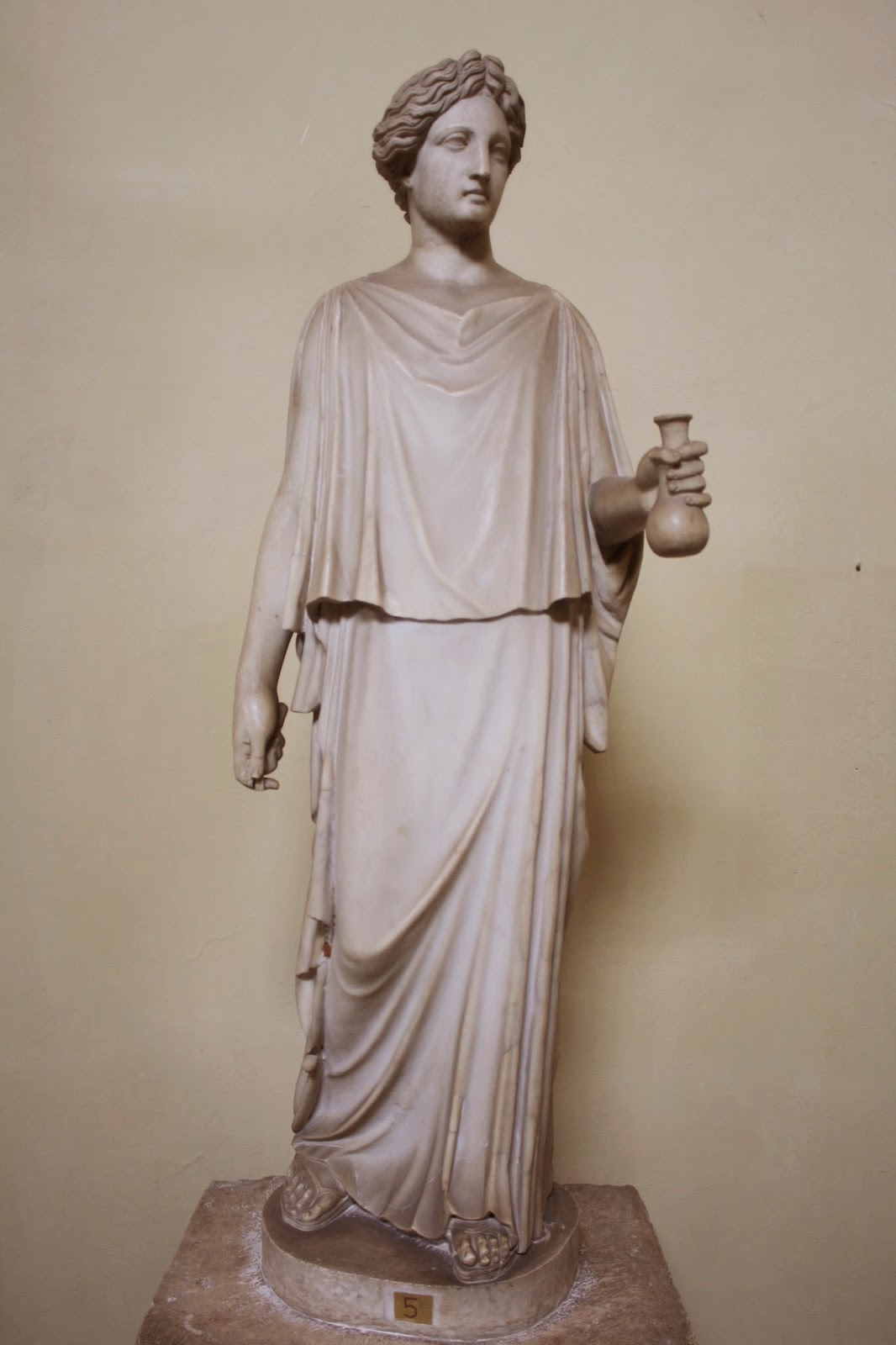
 
statue of a women wearing peplos

About the costume
·         A peplos was a type of tunic worn by women it was worn as a full legnth garmet because it was seen as improper to reveal any skin of the body besides the face or arms. The ways of pinning it changed over time. The most common way to wear it could be done by the following process:

       First fold the cloth in half, and put it so that the fold in the cloth came under your right armpit and down your right side.
       Then pull up on the front and back of the cloth so they overlap over your right shoulder and use pins to secure the front and the back
       Next pull the front over your left shoulder, and pin it to the back of the cloth behind your back
       Finally, given that your left side is all remained open, many woman used belts to keep the dressed closed and to provide support to keep it held up.
       Archeological excavations in various Greek sites have given evidence that jewelry was popular in ancient Greece. Women wore earrings, bracelets, and necklaces. Evidence suggests that men in early Greece wore jewelry also, but by the fourth century, it appears that the trend had ended.
       Makeup was used in ancient Greece. Rich women stayed indoors most of the day. Pale skin was fashionable and a sign of prestige. Women applied white lead (which was toxic) to their faces to lighten their complexion. Chalk was also used to lighten their complexion, but it wore off quickly. Connected eyebrows were also fashionable, so women decorated their eyes with dark powder. Red powder was also applied to their cheeks.

       In case of costume-Dress/ cuts/drapes :  The Ionic tunic was called Chiton and  The Doric tunic was called Peplos  These Tunics were always fluid and live, never shaped or cut and they were worn around the body fastened by pins, introducing the first appearance of ‘the drape’. Greek clothing changed little over time. Long pieces of fabric were used to make the Greek clothes. The main item of clothing was a tunic, called a chiton. A chiton was made of a two sheets of light drapery and worn directly over the body. A belt, usually under the breast ("high-girded") or around the waist ("low-girded") helped contain it. Double-girded were also fashionable.

       Materials used :  Clothes in Greece were made out of three types of materials. The most frequently used material was wool, which was woven from very coarse to very soft. Women and men in Greece wore nearly the same kind of clothes. These clothes were not shaped or fitted to the body, but were instead draped over the body in soft folds. There were basically four types of clothes, which were all rectangles.

       Accessories-  A gold Mycenaean diadem. Diadems as well as wreaths and caps were often used to adorn at the head  like a modern hairband or wreath .
v For special occasions, women adorned their heads with decorative metal bands called stephane, which looked much like modern-day tiaras.
v Different types of jewelry were produced in the Hellenistic period of Ancient Greece-Necklaces, earrings, pendants, pins, bracelets, armbands, thigh bands, finger rings, wreaths, diadems, and other elaborate hair ornaments.

v Bracelets were often worn in pairs or in matched sets. Pieces were usually inlaid with pearls and dazzling gems or semiprecious stones-emeralds, garnets, carnelians, banded agates, sardonyx, chalcedony, and rock crystal. Artists also incorporated colorful enamel inlays that dramatically contrasted with their intricate gold settings.

       Footwears : Greeks wore a large variety of shoes, depending on sex, wealth and the kind of activity for which the shoes would be used. Ancient Greeks rarely wore closed shoes and women wore light sandals because they spent most of their time inside the house. Most common colour was black but there were also colourful shoes for both men and women. Cork and felt shoes were worn exclusively by thehighly educated, sophisticated companions called hetaerae.
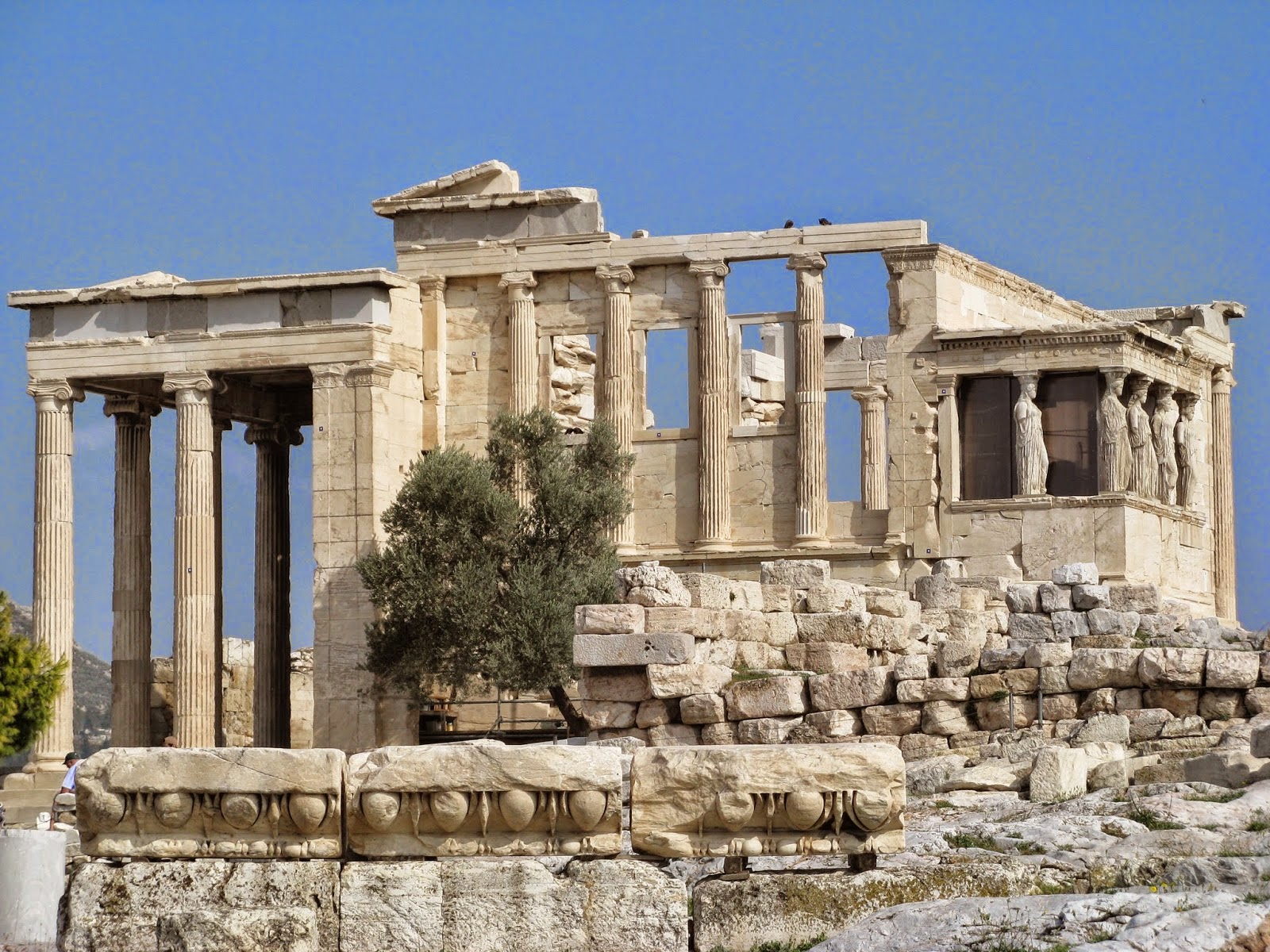
Erechtheum, Acropolis of Athens


Sunday, 31 August 2014

Art and fashion in prehistoric Europe

Art and fashion in prehistoric Europe

Ancient Europe alludes to the anciently time of Europe, normally taken to allude to human ancient times since the Lower Paleolithic.

From around 100,000 years back, for a long time, our progenitors seemed to create practically nothing, making stone devices that were undefined from those made by Neanderthals and living like them as ahead of schedule seeker gatherers. Venus dolls from this time have been found over a field of domain from the west of Europe into Russia, which proposes that individuals were connected over these immense separations, conveying and creating social connections that would be invaluable during an era when nourishment assets were constrained or drained in particular zones. The Venus of Willendorf is one of the soonest pictures of the body made by mankind. It stands a little more than 4 ½ crawls high and was cut nearly 25,000 years back.
 A Neolithic figurine shows a girl in a short skirt and ornate top
 It was found on the banks of the Danube River, in Austria, and it was in all likelihood made by seeker gatherers who existed in the territory. Rock Art is found in Scandinavia and northern Russia, and around the Mediterranean in Eastern Spain and the soonest of the rock drawings in Valacamonica in northern Italy, yet not in the middle of these zones. The Lascaux Caves in France, Altamira in Spain, Nazca Lines in Peru and the Stonehenge in the UK are a portion of the illustrations of the workmanship present amid that time.

The cavern canvases reveal to us that amid that time individuals drew a greater amount of buffalo, stallions, bulls and so forth as these were viewed as creatures with quality. In today's opportunity, we see different creatures, for example, lions, tigers, elephants and reptiles, for example, crocodiles and the crocs. Additionally, after precisely watching the Venus dolls I accept that a fat and short ladies with improved hips and breasts was viewed as an image of fruitfulness. Yet in today's chance, a dainty lean lady with waist sizes alongside zero are viewed as more popular. Likewise, forms in the Prehistoric Europe were made utilizing stone, mud and so on. Pots and stoneware were made utilizing mud and soil. Today, we see earthenware made out of artistic, porcelain, limestone and so forth. Individuals in Prehistoric Europe wore attire made out of skins of creatures, for example, buffalo and so on.
Venus of Willendorf
For ladies, grass skirts and adornments made out of bones and stones was in. Likewise different garments were made out of the hide of creatures to secure them from frosty and other unfavorable climate atmospheres. In today's 21st Century, because of a fast increment in engineering, we have different regular strands (like silk, cotton, jute and so forth.) and synthetic filaments (like nylon, polyester, rayon and so on.) used to make a mixture of articles of clothing.


Advancement of craftsmanship and style has advanced over a drawn out stretch of time. Europe has progressed quickly, be it in workmanship or design, and still keeps on striing for flawlessness.

A Neolithic figurine showing a goddess sitting on a bench

Tuesday, 26 August 2014

Much needed tips for this Fall

Retake on Fall fashion
So when I was told to write a feature article as my next assignment, I thought of a million different topics from the state of psychedelic to the streets of Manhattan and Paris, as I scratched m head about things I could write to one category popped up in feature writing that was the “how to” category and since I have never really explored this category I thought why not write a piece which is practical and can help in a small way to the industry that I see a future in.


Within the blink of an eye fall or as I call it the most exiting fashion season of the year is here And though there is still time for that perfect blend of winter and summer air, all my favourite magazines are seem to be pulling a fall looks already as I devour the September issues of these mags I tend to get super exited and pumped about the new (and seriously fabulous looks) that I have been planning in my head but you are just lucky enough to get an insight into it.
When I think of this season, I think of fashion without any limitations since there is a moderate temperature it allows one to experiment with hemlines and layers, which tend to lead us to some very electric combinations for this season


1.              Show some bold color.
Ok so the basic thing we think when we thing of fall fashion is a palette of black, maroon or camel. I am completely anti the idea of “fall colours” (something which can be translated to as BORING in my fashion dictionary). Instead I suggest adding pops of bight colours to neutral outfits, seriously make Ur imagination run wild by adding a hint of fall colours in your boots and adding up a bright summer dress to it.


2. Layer those statement necklaces.
So we have all seen this look for ages, but I am amongst those not so gutsy people who haven’t tried it yet. But I have seen many of my friend rock this look with a hint of colour and texture, a statement neckpiece adds a whole new level of interest in what your wearing .You can work this look by doing what the girl did in the above shown picture i.e. throw a think and bulky neckpiece over a thin but bulky one.

3. Tie a jacket or shirt around your waist.
So this one is my personal favourite and I have been using my light jacket to wrap around my waist and its functions like a belt too! Just let it hang loose like the girl in the picture. This trend has made a comeback from the 90’s (yes! most of us were just kids back then)

4. Find a bright blazer.
A fun a bright blazer can POP up can look and yet look refined and lady like, this trend goes back to last fall collections and is still as we say IN. just add one to against a monochrome outfit. There is a variety available at Zara and they aren’t all that expensive.


5. Use lipstick as an accessory.

Since it is fall you can never go wrong with a bold lipstick. A bright pick or a classic red choose any to take your look to the next level. Red lips make a simple top and jeans with a structure bag sorta combination look worth of being featured in teen vogue. on the other hand my personal favourite is shades of pink which highlights feminine traits in no matter what you choose to wear.


And finally the best fashion advice one can give to anyone Throw fashion rules out the window! Though this post was mostly what to wear with what but these are just general ideas that an average Design school (and fashion lover at heart) can give you. To me personally the most IMP fashion rule is do whatever the heck suits you , as long as you can carry it off with that killer smile of yours ...

Until next time
XOXO


Template by BloggerCandy.com